
Team Profile
England
 ENG
National
ENG
National
England Men’s Cricket Team History
The origins of English cricket trace back at least as far as 1739, when records indicate a match between an “All England” side and Kent. However, the first recognized Test match took place in March 1877, when James Lillywhite’s XI competed against an Australian XI at the Melbourne Cricket Ground. England’s first home Test occurred in 1880, featuring a victory against Australia where WG Grace scored 152 runs. Following a narrow defeat to Australia at The Oval in 1882, which prompted a mock obituary for English cricket, a tour of Australia saw captain Ivo Bligh presented with an urn, establishing the legendary Ashes rivalry.
For the next half-century, the team operated under the stewardship of the MCC, expanding Test cricket to include South Africa, the West Indies, New Zealand, and India. The 1932-33 “Bodyline” series, led by Douglas Jardine, became a diplomatic flashpoint as the use of short-pitched, intimidatory bowling by Harold Larwood drew significant controversy. After the Second World War, England reclaimed the Ashes in 1953 under Len Hutton, who also led the team to a successful defense in Australia in 1954-55. By 1954, England had also contested their first series against the newly independent Pakistan.
See also: South Africa
In 1971, England participated in the world’s first one-day international against Australia. The popularity of the limited-overs format led England to host the first three Cricket World Cups in 1975, 1979, and 1983. While the team reached the semi-finals in their first five appearances, they suffered three final defeats, including a loss to Pakistan in 1992, before finally securing their first 50-over World Cup title in 2019 after a tied final against New Zealand.
The mid-20th century saw the emergence of stars such as Peter May, Fred Trueman, and Jim Laker. Ray Illingworth captained the side to an Ashes victory in 1970-71, followed by an era defined by figures like Geoffrey Boycott, Tony Greig, and the iconic allrounder Ian Botham. Despite Botham’s heroics during the 1981 Ashes, the team faced inconsistency and administrative turbulence throughout the 1980s and 1990s.
See also: West Indies
England’s fortunes improved significantly in the 2000s under captains Nasser Hussain, Michael Vaughan, and later Andrew Strauss. The 2005 Ashes victory served as a high point, and by 2011, the team reached the No. 1 Test ranking under the leadership of Strauss and coach Andy Flower. This period included a landmark series win in India under Alastair Cook but concluded amid internal friction surrounding Kevin Pietersen’s 2014 exclusion.
Following Joe Root’s lengthy tenure, which saw him become the team’s all-time leading Test run-scorer, Ben Stokes assumed the captaincy in 2022. Partnering with coach Brendon McCullum, they implemented an aggressive brand of cricket known as “Bazball.” This philosophy mirrored the rise of T20 cricket, a format England helped originate for domestic competition. England achieved significant success in the shortest format, winning the 2010 T20 World Cup and later becoming the first team to simultaneously hold the 50-over and 20-over world titles with a 2022 T20 World Cup victory. While the team experienced a successful run of series wins following the adoption of Bazball, including a classic draw against India in 2025, they subsequently navigated a period of mixed results against various international opponents.
Team Performance
—
ICC Ranking
—
Win %
—
Matches Played
Team performance appears here once linked match scorecards exist.
 Features
Analysis
Features
Analysis
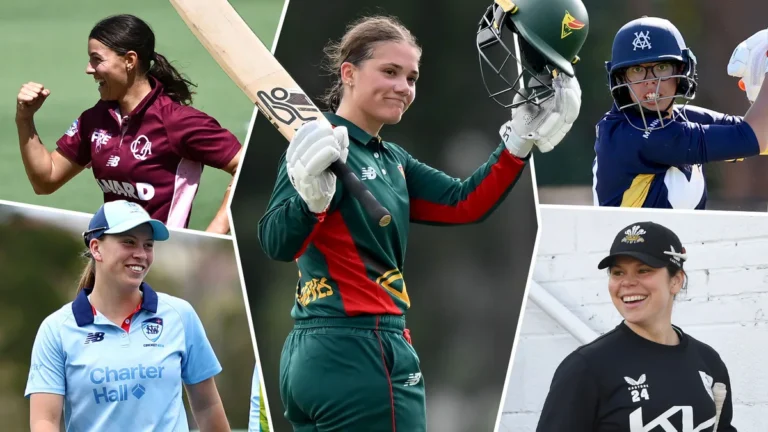
Women's State Squads Announced for 2026-27 Season
The squads for the upcoming Women's National Cricket League season have been announced, with several changes and new signings across…
Read Article →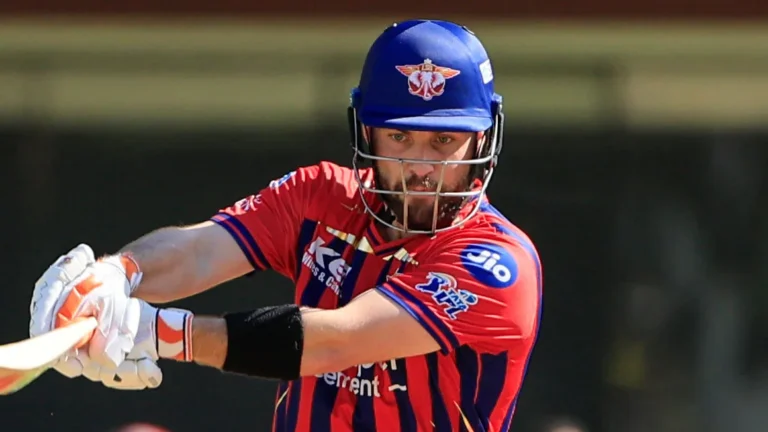 Match Reports
Analysis
Match Reports
Analysis
Inglis stars with rapid 85 before Urvil Patel’s record-equalling fifty leads Chennai to win
Josh Inglis produced a scintillating 85-run innings for the Lucknow Super Giants, but his efforts were overshadowed by Chennai Super…
Read Article →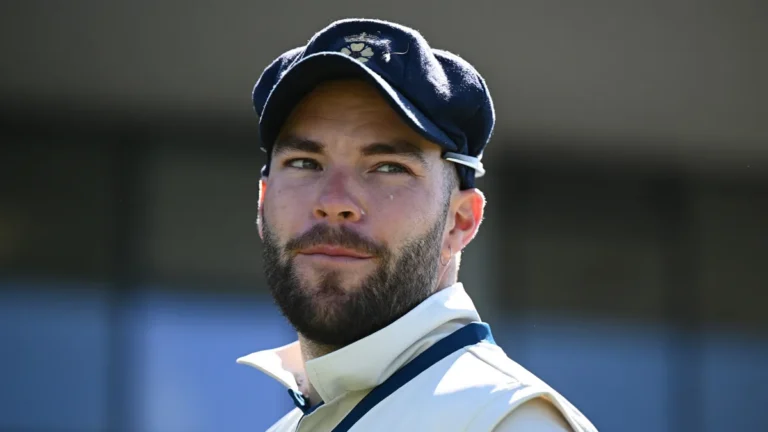 Match Reports
Analysis
Match Reports
Analysis
Caleb Jewell finds rhythm as England stars return to County action
Caleb Jewell revitalized his batting form with a move down the order, posting an unbeaten 91 to help Derbyshire dominate…
Read Article →