Team Profile
West Indies
 WI
National
WI
National
West Indies Men’s Cricket Team History
The history of the West Indies cricket team is inextricably linked to the complexities of colonialism, resistance, nationalism, and the region’s socio-economic evolution. The team played its first international match in 1928, and early challenges reflected the colonial structures of the time; during the 1930 home series, the team utilized four different captains across four Test matches, with each leader representing the specific British colony hosting the fixture. Despite these administrative divisions, the team showcased immense potential, exemplified by the partnership of George Headley and Learie Constantine, who secured the West Indies’ inaugural Test victory in Georgetown.
A significant turning point occurred in 1960 with the appointment of Frank Worrell as the team’s first full-time non-white captain. His tenure signaled the beginning of a dominant era, starting with the iconic Tied Test at the Gabba and fostering a surge in popularity that saw the team celebrated globally, most notably during a triumphant tour of Australia. Following the era of the legendary “Three Ws”—Worrell, Everton Weekes, and Clyde Walcott—the team was elevated by the exceptional talents of Garfield Sobers. This period laid the foundation for the pace-dominated dynasties led by Clive Lloyd and Viv Richards, a stretch of dominance that saw the West Indies remain undefeated in a Test series for 15 years following their first series win in Australia during the 1979-80 season. The team also established itself as a premier force in limited-overs cricket by winning the first two iterations of the ODI World Cup.
See also: Australia
As the 20th century progressed into the 90s, the West Indies continued to produce world-class individual talents such as Curtly Ambrose, Brian Lara, and Shivnarine Chanderpaul. However, the side eventually experienced a decline characterized by inconsistent on-field results and ongoing administrative challenges. In the 21st century, the rise of the T20 format saw players like Chris Gayle, Andre Russell, Dwayne Bravo, and Sunil Narine become global icons, leading the team to two T20 World Cup titles. Despite these individual successes, the squad frequently navigated conflicts with the cricket board regarding the changing landscape of the modern game. This period of transition reached a low point in 2023, when the team failed to qualify for the ODI World Cup for the first time in its history.
Team Performance
—
ICC Ranking
—
Win %
—
Matches Played
Team performance appears here once linked match scorecards exist.
 Match Reports
Analysis
Match Reports
Analysis
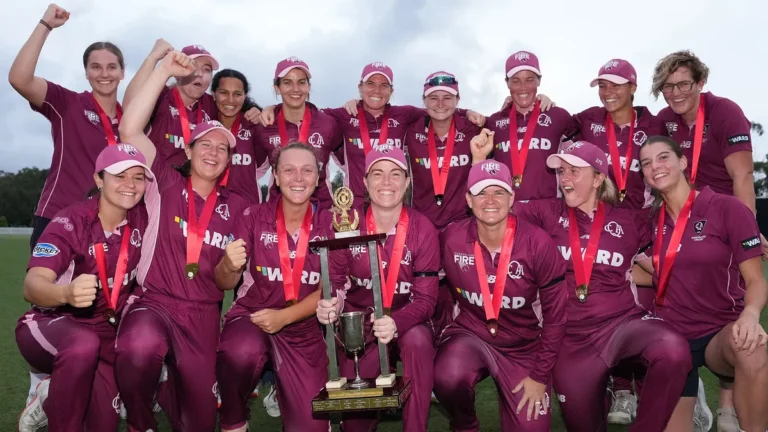
Queensland Claims WNCL Title in Thrilling Rain-Affected Final
Queensland has clinched its second national domestic one-day championship, overcoming New South Wales by seven runs via the Duckworth-Lewis-Stern (DLS)…
Read Article →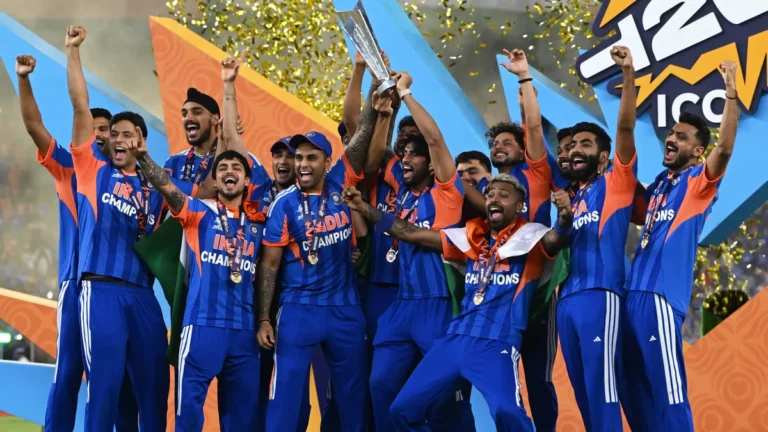 Match Reports
Analysis
Match Reports
Analysis
India Secures Historic T20 World Cup Title Defense Against New Zealand
India has become the first nation to successfully defend a T20 World Cup title, powering to a dominant 96-run victory…
Read Article →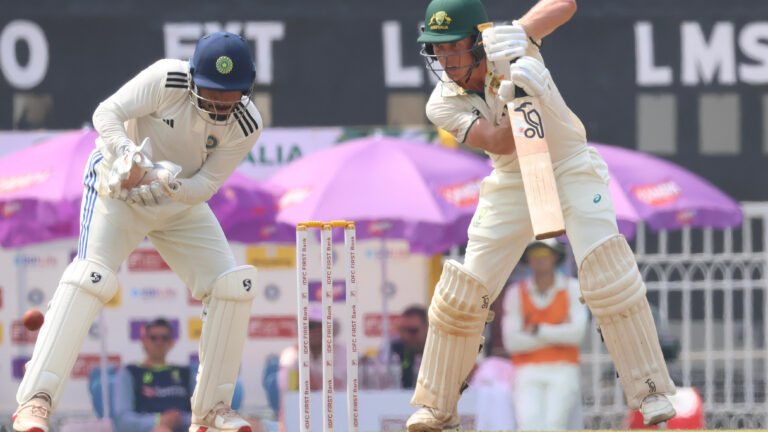 Features
Analysis
Features
Analysis
Young Australians Draw Crucial Lessons from Indian Trial by Fire
Australia A's recent India tour exposed emerging talents to punishing subcontinental conditions, offering valuable tactical lessons under coach Tim Paine…
Read Article →