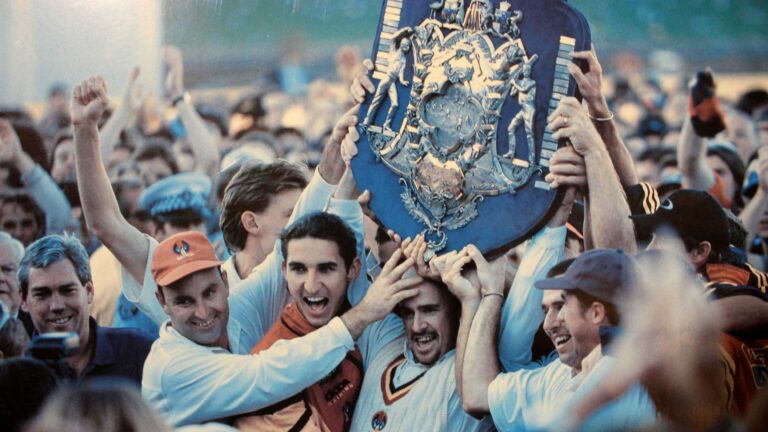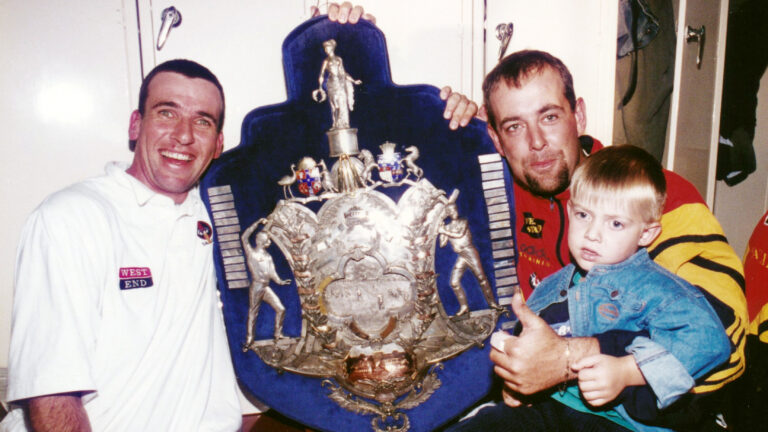
In the tapestry of cricketing history, some threads remain in plain sight while others hide in the seams. For Greg Rowell and Gavin Fitness, the 1995 Sheffield Shield final occupies a paradoxical space in their memories—a blend of triumph and personal sorrow that neither expected to carry with them into old age.
The Bittersweet Ascent of Greg Rowell
When Rowell departed Sydney in 1991, he carried more than a car full of belongings—he carried the weight of ambition. The 24-year-old fast bowler had earned his O’Reilly Medal in Sydney grade cricket but found no room in New South Wales’ star-studded pace attack. With no contracts and few cricket-friendly jobs, he made the bold decision to chase a Baggy Green in Brisbane, a city with its own formidable pace attack.
His preparation bordered on ascetic. After quitting his bank job, Rowell returned to his parents’ Canberra home, living solely on savings while following a grueling ‘Eye of the Tiger’ regimen—weights in the morning, runs in the afternoon. The gambit paid off: within months, he made his List A debut for Queensland and soon earned three Shield caps. A career-best 10-96 in Hobart propelled him into the Prime Minister’s XI, where he dismissed India’s Sachin Tendulkar.
Yet by 1995, the trajectory took a different turn. As Queensland prepared for the landmark Shield final, Rowell found himself on the sidelines—not for lack of merit, but due to forces beyond his control. ‘Day five was euphoria for some, but personal ruin for me,’ he recalls. The irony of being part of a historic win while enduring life’s most difficult day lingers as much as the victory itself.
Gavin Fitness: The Accident That Changed Everything
For Fitness, the phone call from selector Max Walters in 1995 was both a career-defining moment and a surreal twist of fate. Selling income insurance in Brisbane when he received the call, the 25-year-old wicketkeeper had barely scratched the surface of first-class cricket. At the time, Queensland’s keeping hierarchy was a stacked deck—Wade Seccombe, Ian Healy, and an emerging crop of successors.
Seccombe’s collision with Dirk Tazelaar at the Gabba during the regular season changed everything. The backup keeper was rushed to hospital with a broken collarbone, opening the door for Fitness, who had only played two List A matches. ‘You had to be ready if your opportunity came,’ Fitness reflects. ‘And mine came at the most pressure-packed time of the year.’
The transition was not without challenges. Fitness’s home in Stafford had become a de facto team house with captain Stuart Law, fostering a squad-first mentality that John Buchanan emphasized. ‘Under Buchanan, we knew winning a Shield would take 20 men doing it bloody well,’ Fitness notes.
The Legacy of a Forgotten Final
Both men view the 30-year reunion differently now. Rowell admits to giving a ‘bad interview’ at the 20-year milestone, struggling to reconcile the public euphoria with his personal heartbreak. ‘Everyone deserves to feel part of the triumph,’ he says. ‘But my experience was complex, and I was lying about it when I tried to pretend otherwise.’
For Fitness, the reunion was emotionally charged for different reasons. ‘I looked around and saw mates I hadn’t seen in three decades, celebrating something that happened because I was there to take Wade’s place.’ He points to the broader lesson: ‘The 1995 final proved that in cricket, as in life, sometimes the sliding doors open when you least expect them.’
As Queensland’s first Shield title in nearly two decades, the 1995 victory remains a touchstone for the state. But for Rowell and Fitness, it encapsulates something deeper—how even the most historic moments can contain deeply personal, often painful narratives. Their reflections reveal the dual nature of triumph in sport: a collective memory etched in public consciousness, and individual stories sometimes remembered in the quietest corners of the mind.