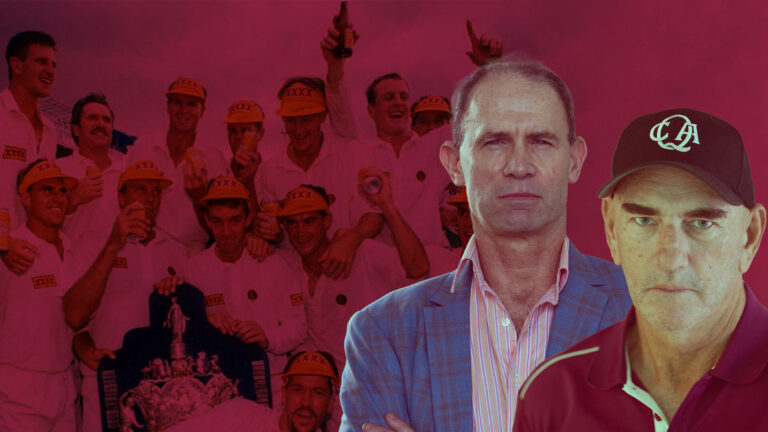
The defining narrative of South Australia’s Sheffield Shield victory 29 years ago remains the dramatic final day against Western Australia. Yet the more telling chapter in their championship journey occurred earlier at Bellerive Oval, where a rain-delayed first-class encounter with Tasmania exposed uncomfortable truths about cricket’s structural vulnerabilities in an era of evolving regulations.
Game Theory in the Age of Crisis
Amidst the global turmoil of the 1996 World Cup security debacle in Sri Lanka, SA captain Jamie Siddons faced a tactical dilemma: maintain a cautious Shield campaign or exploit the chaotic weather patterns to manipulate his team’s position. With a 120-over maximum on day four and Tasmania’s weakened pace attack, Siddons recognized the game theory opportunity to engineer a decisive result.
The SA coaching staff’s hotel monitoring strategy revealed a systemic acceptance of weather manipulation in cricket scheduling. While Jeff Hammond’s “social trips” to assess playing conditions were framed as team bonding, they simultaneously served as reconnaissance operations to determine the likelihood of a weather-contrived victory.
The Boon-Siddons Compromise
David Boon’s diplomatic approach to the crisis reflected his post-international transition phase. By agreeing to the mutual innings forfeiture plan, the future ICC referee demonstrated an understanding of cricket’s ethical gray zones while preserving his team’s integrity. This strategic restraint contrasted sharply with Geoff Lawson’s 1991-92 precedent, where aggressive manipulation led to public backlash.
Rain as a Strategic Resource
The Bellerive Oval game revealed how weather can function as a meta-weapon in first-class cricket. SA’s decision to bowl first on a bouncy surface – a first for their otherwise batting-friendly season – demonstrated calculated risk-taking. The 8-258 first-innings score on a rain-soaked pitch showcased the team’s adaptability to shifting conditions in a way that traditional batting strategies couldn’t accommodate.
Paul Wilson’s emergence as a key player in this context highlighted the era’s transition dynamics. His hotel bar diplomacy during washouts demonstrated how first-class cricket had become a game involving off-field negotiations as much as on-field execution.
The Governance Vacuum
The Australian Cricket Board’s ambiguous response to the 1996 incident mirrored its 2000 Test match dilemma. The lack of clear protocols for weather-contrived results created a regulatory vacuum that allowed ethical compromises to proliferate. The Bellerive case became a precursor to the Cronje/Hussain scandal, underscoring the need for explicit governing body guidelines on rain-ruined match scenarios.
Legacy of a Disputed Championship
While SA eventually won the championship through traditional methods, the Bellerive campaign’s legacy persists in modern cricket governance. The incident contributed to the 2006 DLS method implementation, which sought to address weather-related fairness concerns. It also marked an inflection point in how cricket administrators perceive match integrity in the digital age, where public scrutiny of scheduling decisions had begun to intensify.
The game’s relegation to historical obscurity reveals a broader truth about sports journalism: the most ethically significant episodes often remain unexamined as long as they don’t produce immediate scandals. The 1996 SA-Tasmania contest serves as a cautionary tale about how weather patterns can become vectors for strategic manipulation in first-class cricket, particularly during league phase transitions.